Wound Care Education, Tools and Resources are Delivered in Partnership with Wound Care Professionals

Essential Clinical Guides
Empowering Point‑of‑Care Excellence
Quick-reference tools designed to elevate clinical decision-making, enhance patient care, and support wound healing success at the bedside.
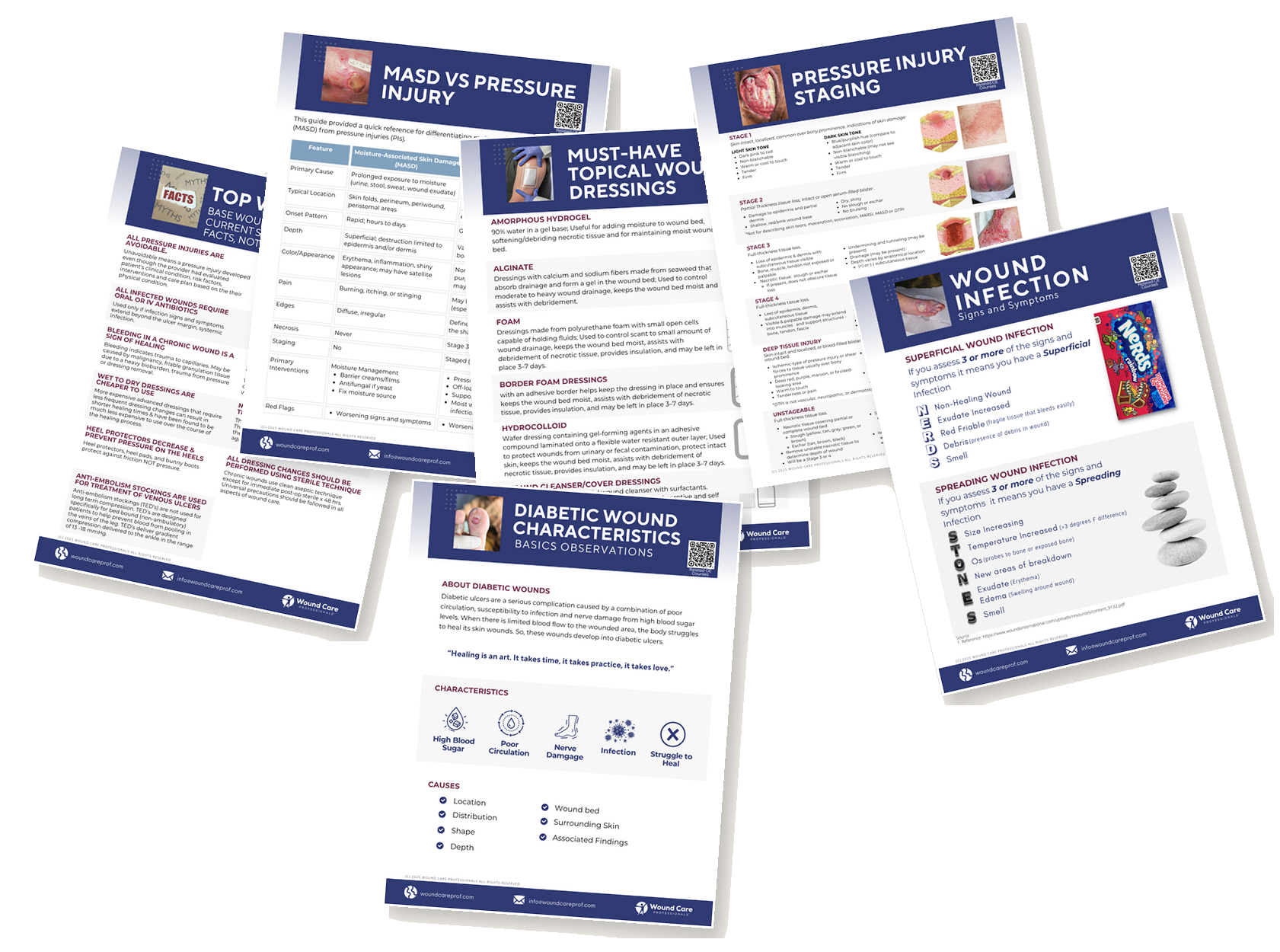
ESSENTIAL CLINICAL GUIDES
Empowering Point-Of-Care Excellence
Quick-reference tools designed to elevate clinical decision-making, enhance patient care, and support wound healing success at the bedside.
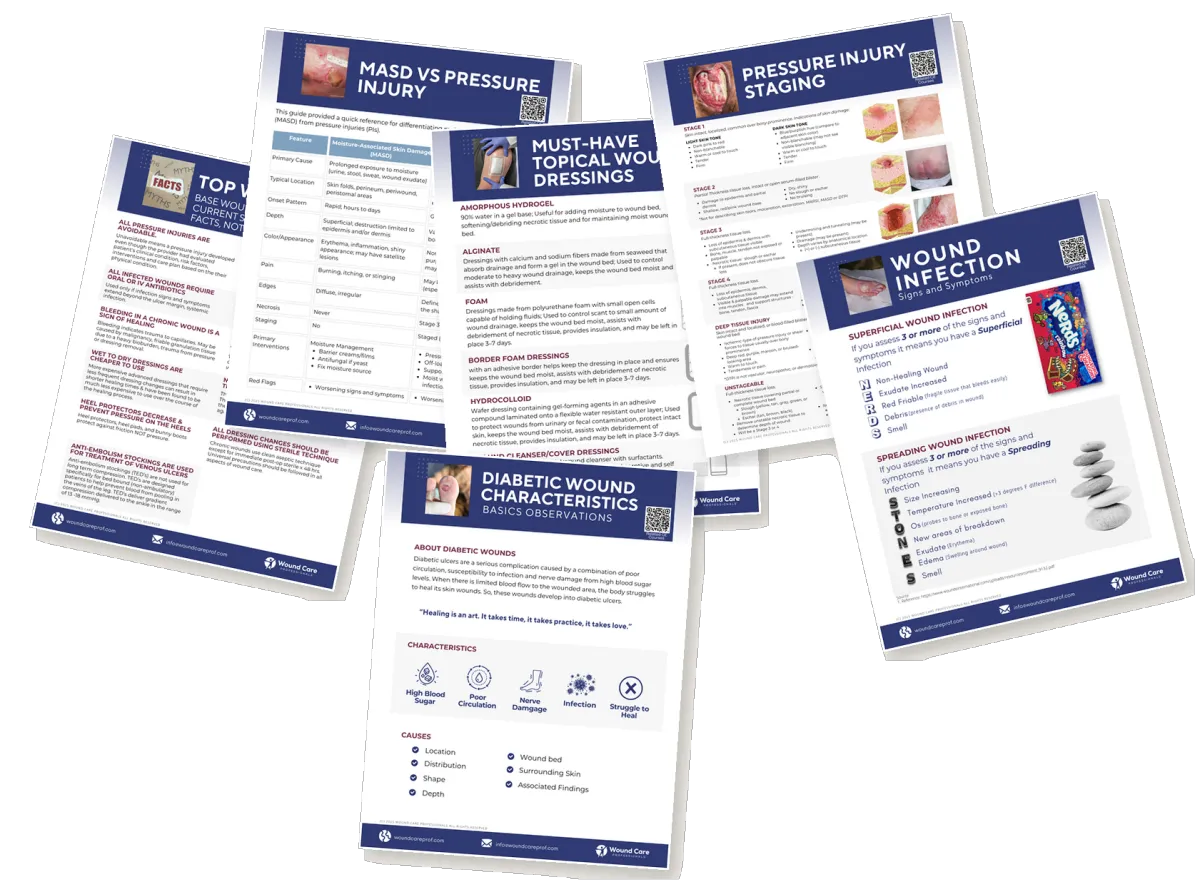
ESSENTIAL CLINICAL GUIDES
Empowering Point-Of-Care Excellence
Quick-reference tools designed to elevate clinical decision-making, enhance patient care, and support wound healing success at the bedside.
Fall into one of these Categories? We'd Love To Help You Grow!
NURSES
PHYSICIANS
THERAPISTS
CNA/MA
MEDICAL INDUSTRY
HEALTHCARE PROFESSIONALS
HEALTHCARE ORGANIZATIONS
UNLICENSED HEALTHCARE PROFESSIONALS
INTERNATIONAL HEALTHCARE PRO
Browse Here, Buy in Our Store
Look through the guides below to find what you need. To buy single guides, visit our store. Want every guide? Get the complete collection in one purchase.
Assessment & Staging
7 guides · digital download

Anatomical Roadmap
Simplifies body landmarks, movement and location terms to support accurate assessment and consistent documentation.

MASD vs Pressure Injury
Distinguish moisture-associated skin damage from pressure injuries by cause, location, appearance, and staging.

Pressure Injury Staging
Quickly stage pressure injuries from redness to exposed bone, and document accurately to prevent progression.

Skin Lesions
Identify skin lesions with confidence: key types, appearances, and warning signs for accurate assessment.

Skin Tear Categories
Classify and treat skin tears by severity, from intact to fully missing flaps, with clear dressing guidance.

Tissue Types
Recognize granulation, slough, eschar, and epithelial tissue to assess healing stages and guide treatment.

Wound Edges
Use edge appearance to assess healing progress and detect underlying complications early.
Wound Types & Conditions
7 guides · digital download

Body Fold Management
Manage moisture, friction, and irritation in body folds while recognizing early signs of skin breakdown.
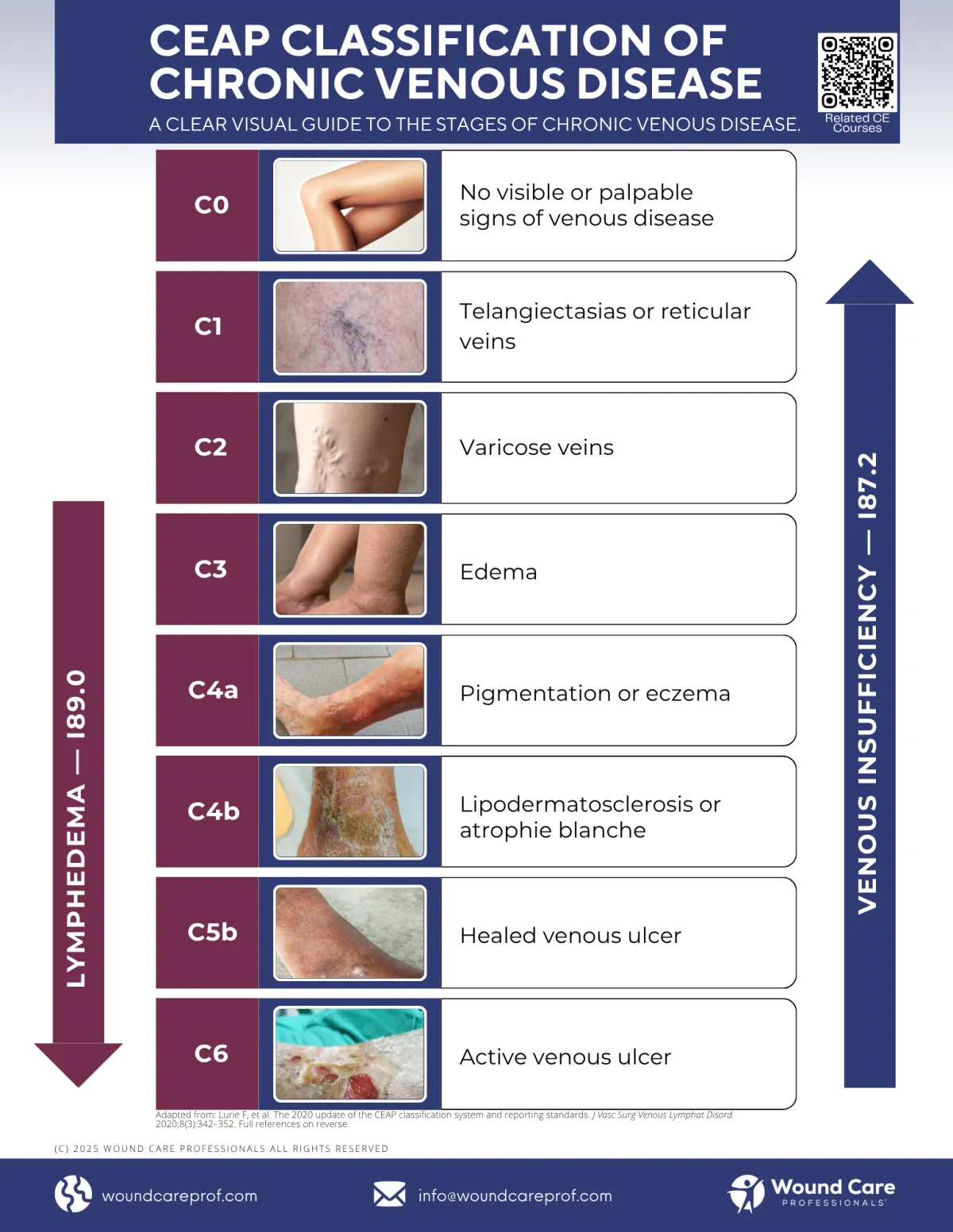
CEAP Classification
Recognize and classify chronic venous disease from early vein changes through edema, skin changes, and ulceration.

Diabetic Wound Characteristics
Recognize and assess diabetic wounds by identifying callused edges, slow healing, and a high risk of infection.

Healthy Feet Tips
Daily inspection, gentle hygiene, and smart shoe choices that help prevent complications and protect mobility.

Lower Extremity Ulcers
Identify arterial, venous, and neuropathic (diabetic) ulcers by location, appearance, and key characteristics.

Lymphedema
Recognize and manage lymphedema early. Compression, not antibiotics, is key to reducing chronic swelling.

Wound Infection: Signs & Symptoms
Recognize changes in drainage, odor, redness, warmth, and other signs that may indicate wound infection.
Treatment & Dressings
6 guides · digital download

5 Rules for Wound Healing
Remove the cause, keep it warm and moist, manage bacteria, and nourish the body for faster recovery.

Debridement Using BEAMS
Overview of BEAMS debridement methods. Select the right approach based on presentation, tolerance, and clinical goals.

Must-Have Topical Wound Dressings
Match dressing type to purpose to manage moisture and support wound healing.

Wet-to-Dry Dressing
Why wet-to-dry dressings are outdated and painful, and the evidence-based alternatives to use instead.

Wound Exudate Drainage
How exudate cleans the wound, delivers repair materials, and supports healing, and what to look for.

Wound Exudate Types and Volume
How different drainage types, from clear to purulent, indicate healing progress and infection risk.
Practice & Safety
2 guides · digital download

Legal Elements of Negligence
Understand duty, breach, harm, and proximate cause to reduce liability and improve clinical accountability.

Wound Myths
Clear up common wound care misconceptions and separate outdated practices from evidence-based care.
Check our what our WCP Community Members are saying...
The founder of Wound Care Professionals, Nancy Morgan has been a true inspiration on my journey to furthering my wound care education. I am deeply grateful for the opportunity to learn from WCP and continue to grow in this vital area of healthcare.

Bianca S.
MHA, BA, LVN